Tesla ECU repair for real vehicle symptoms
Tesla modules come in for module communication, battery reset requests and water-damaged electronics. The intake asks for vehicle details, codes, prior repairs and module condition so the quote is based on the actual problem.
Tesla module diagnostics and diagnostic testing
We start with the module and vehicle record instead of guessing. Repair, programming, cloning and testing are supported across the Tesla model range, with the final price sent after inspection by phone or email.
Tesla models we support
Use the mail-in intake for Model S, Model 3, Model X and Model Y. If your exact model is not listed, choose Tesla or Other on the form and include the year, make, model and ECU part number.
Shop note for Tesla owners
Tesla service requests need module details and fault history before any repair or reset work is quoted.
Tesla module and battery-related diagnostics
Tesla service requests are reviewed by module type, fault history, water exposure, battery reset need and communication status. Include the exact warning messages and what happened before the module was removed.
EV module service expectations
Not every EV warning is solved by a module reset or repair. The diagnostic checkout helps decide whether the mailed module can be serviced or whether the next step is vehicle-side diagnosis.
Tesla module and vehicle details we review
Tesla requests are reviewed against the reported module communication, battery reset requests and water-damaged electronics. The most useful intake includes the exact module label, vehicle configuration, scan communication result, active codes, previous repair history and whether the original module is available. The supported vehicle families on this page include Model S, Model 3, Model X and Model Y.
Tesla ECU cloning and programming compatibility
The technician team supports Tesla ECU, ECM and PCM programming across the model range. Cloning is considered when original-module data can be read and the replacement module is compatible. Original and replacement part numbers, module condition and the reason for replacement determine whether cloning, repair, programming or return testing is appropriate.
How our technicians approach Tesla ECU service
The shop does not treat a no-start, warning light or communication code as proof that the Tesla computer has failed. The bench review is paired with the symptom history so the final recommendation distinguishes a repairable module concern from a replacement-data, programming, power, wiring, immobilizer or other vehicle-side issue.
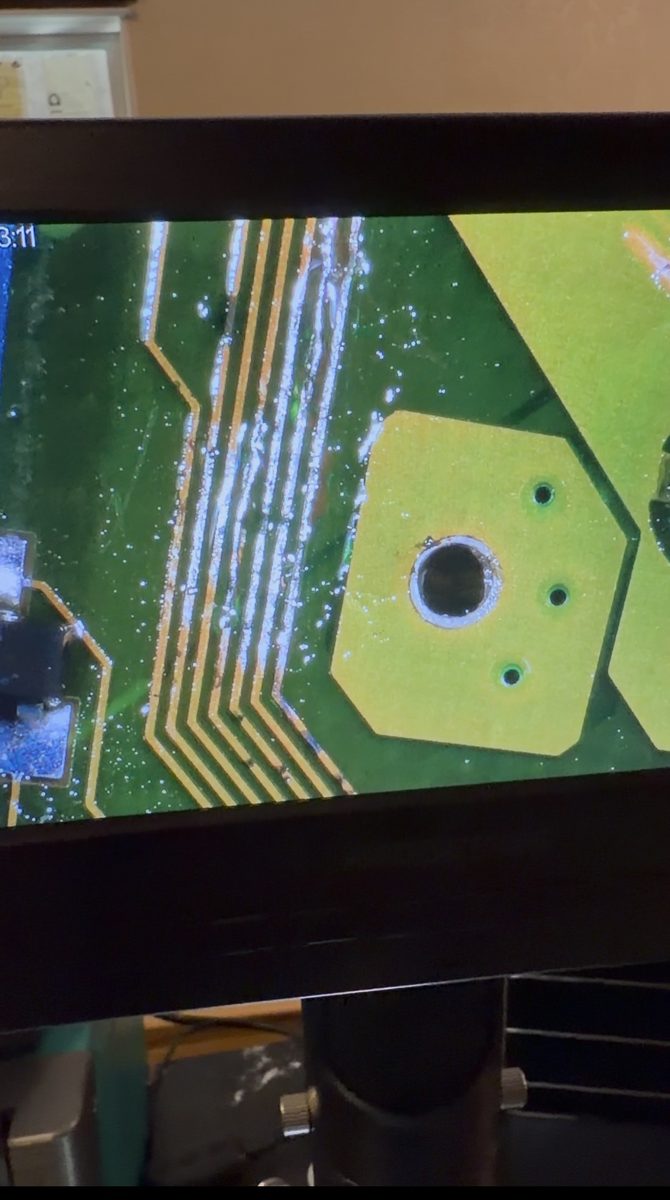
Bench-level inspection before final approval
Our technicians inspect the actual module and use the intake details to document the appropriate next step. This original shop image shows the close visual inspection used to support a repair, testing or data-service recommendation.